Abstract
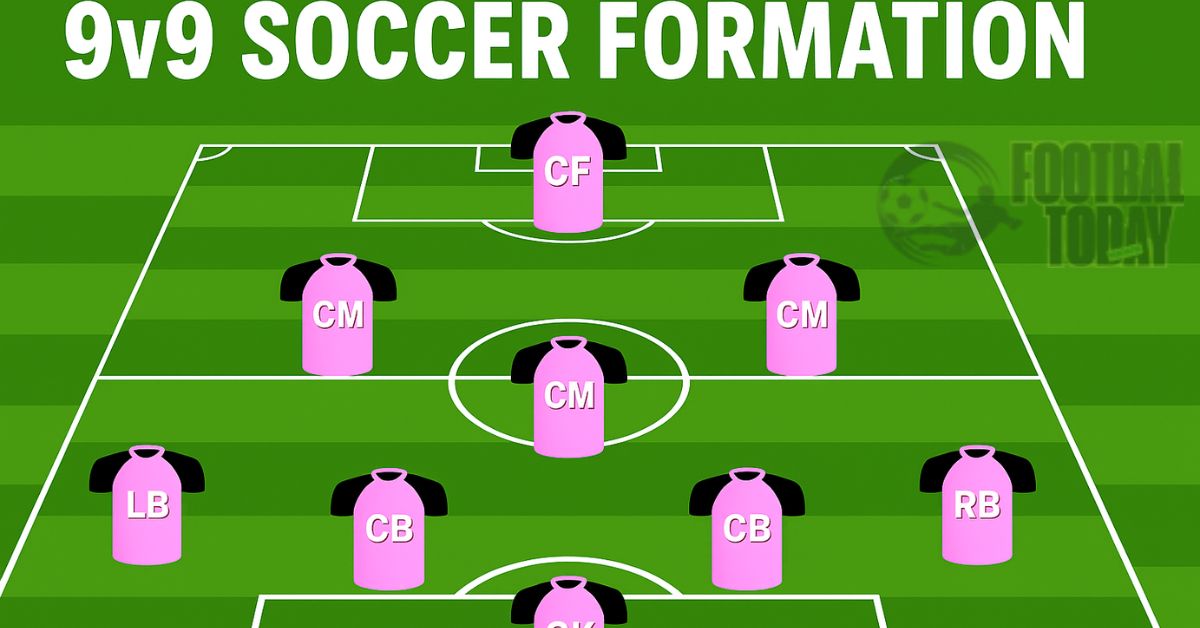
9v9 soccer is an important step in youth football. It helps young players learn teamwork, spacing, and simple tactics before they move to full 11-a-side games. This guide explains 9v9 formations, goal sizes, field dimensions, and basic rules in very simple English. It also includes easy diagrams, clear examples, and helpful tips for coaches, parents, and beginners.
What Is 9v9 Soccer?
9v9 soccer is a version of football where each team has nine players on the pitch. It is mainly used for kids aged 11 to 13. This format sits between 7v7 and 11v11 football. Because the field is smaller than a full-size pitch, players get more touches, make more decisions, and stay more involved in the game.
In recent years, many football associations around the world added this best formation because it fits the physical and mental development of pre-teens. It teaches them teamwork, passing, spacing, and basic tactics in a simple and friendly way.
Why 9v9 Is Important for Young Players
Research from youth football programs in Europe (2023 data) shows that young players who play in small-sided formats like 9v9 average 2–3 times more touches compared to 11v11. More touches mean:
- better ball control
- quicker learning
- more confidence
- stronger teamwork skills
9v9 also makes the game less crowded. Players can finally understand their role because:
- the field is not too big
- the number of players is manageable
- coaches can teach simple tactics
This format prepares young athletes for full-sized football in a healthy, step-by-step way.
Official 9v9 Field Dimensions
Different football associations may use slightly different sizes, but most follow guidelines similar to the FA (Football Association) and US Youth Soccer.
Typical 9v9 Field Dimensions
- Length: 70–80 yards (64–73 meters)
- Width: 45–55 yards (41–50 meters)
This size is small enough for young players to control but big enough for tactics to matter. A smaller field also helps players stay active and focused.
Official 9v9 Goal Size and Net Size
This is one of the most searched topics, and for good reason — coaches and clubs need the correct goal for matches and training.
Standard 9v9 Goal Size
The official goal size for 9v9 is:
12 feet × 6 feet
or
3.66 meters × 1.83 meters
This size is recommended by:
- The FA
- US Youth Soccer
- UEFA development programs
Net Size
Most nets are designed to match the frame:
- Depth: 3–5 feet
- Material: durable polyethylene
- Mesh size: usually 100–120 mm
Forza 9v9 Goals
Many coaches prefer Forza goals because they are strong, lightweight, and easy to move. They come in official 12×6 sizes, making them perfect for training and matches.
Ball Size for 9v9 Matches
For 9v9 soccer, the correct ball is:
Size 4 Ball
- Used for ages 9–13
- Slightly smaller and lighter than Size 5
- Helps young players control the ball better
Studies from youth training centers show that Size 4 balls help reduce injuries and improve passing accuracy for this age group.
9v9 Soccer Formations With Simple Diagrams
Below are the most common and effective formations. All diagrams are simple and easy to understand.
Formation: 3-3-2
This is one of the most popular shapes because it is balanced and simple.
Diagram:
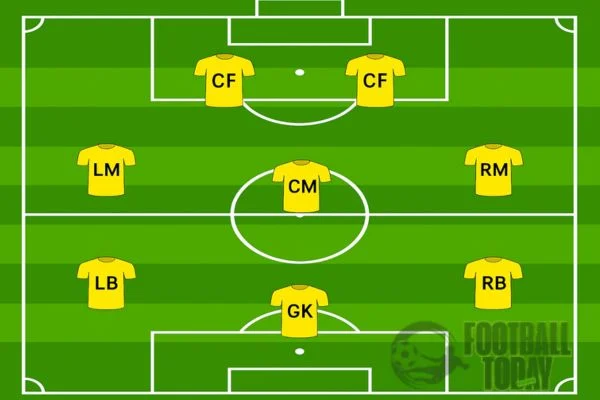
Strengths:
- Strong in every area
- Two strikers make attacking easy
- Simple for beginners
Weaknesses:
- Limited width in attack
- Can get outnumbered in midfield
Formation: 3-2-3
Great for teams that like wide attacking play.
Diagram:
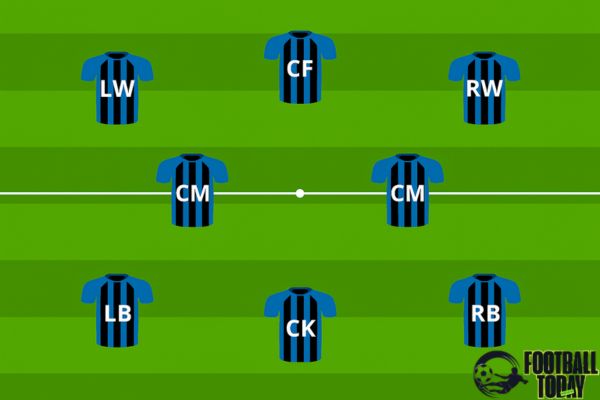
Strengths:
- Very good for attacking
- Wide forwards create space
- Defenders feel protected
Weaknesses:
- Midfielders have a lot of responsibility
- Striker in the center can be isolated
Formation: 2-3-3
This is an attack-minded shape for confident teams.
Diagram:
   F1   F2   F3
    M1  M2  M3
       D1   D2
          GK
Strengths:
- Heavy attacking pressure
- Many passing options
- Creates overloads in wide areas
Weaknesses:
- Only two defenders
- Weak against counter-attacks
Formation: 3-1-3-1
Excellent if your team loves keeping the ball.
Diagram:
        F1
   W1   AM   W2
        DM
  D1    D2   D3
         GK
Strengths:
- Great for possession
- Very strong midfield control
- Good defensive support
Weaknesses:
- Requires skilled midfielders
- Can get outnumbered if DM is isolated
Formation: 2-4-2
Designed for teams that want full control of midfield.
Diagram:
      F1     F2
 M1   M2   M3   M4
      D1    D2
         GK
Strengths:
- Dominates the middle
- Players learn partnership movements
- Good for high possession
Weaknesses:
- Only two defenders
- Weak against fast counter-attacks
Formation: 4-3-1
This is the safest and most defensive shape.
Diagram:
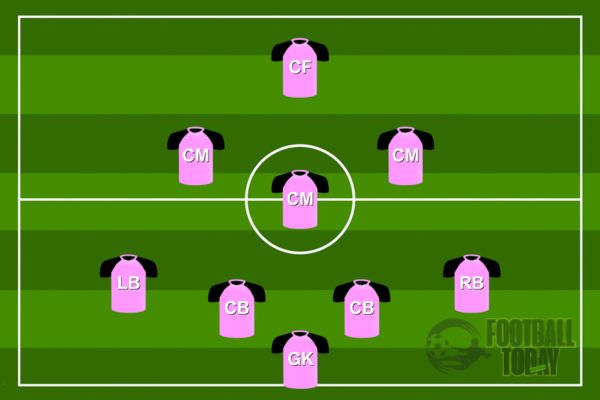
Strengths:
- Very strong at the back
- Good for defensive training
- Helps teach full-back roles
Weaknesses:
- Only one striker
- Can feel too defensive
Bonus Formation: 3-4-1
Some coaches use this to stretch the field and control possession.
Diagram:
        F1
 M1  M2  M3  M4
   D1   D2   D3
         GK
How to Choose the Right Formation
Choosing a formation depends on the players you have.
Choose a formation with 2 strikers if:
- your team likes to attack
- you have fast forwards
- your team struggles to score
Choose a midfield-heavy formation if:
- your players like passing
- you want more ball control
- your team needs structure
Choose a defensive formation if:
- your team concedes too many goals
- your defenders lack experience
- you want to teach shape and discipline
A simple rule:
Play to your team’s strengths, not the opponent’s weakness.
Common Mistakes in Formation
Young teams often struggle with:
- Playing too close together
- Not using the width of the field
- Chasing the ball instead of keeping shape
- Midfielders running too much and tiring early
- Defenders standing too deep
Good coaching can fix these issues with short, clear instructions.
Helpful Tips for Coaches and Parents
Here are easy ways to help players learn and enjoy the game:
Use simple instructions
Short sentences work well:
- “Spread out”
- “Pass and move”
- “Stay in your zone”
Rotate positions
This helps kids understand the whole game.
Encourage creativity
Players learn faster when they feel free to try new things.
Celebrate effort, not just goals
Effort builds confidence and a love for football.
Give positive feedback
Young players respond better to motivation than criticism.
Final Thoughts
9v9 soccer is a powerful development step in youth football. With the right field size, goal size, ball size, and a simple formation, young players grow quickly and enjoy the game more. This guide uses simple English and clear diagrams to help coaches, parents, and players understand 9v9 soccer without confusion.
When kids start with strong fundamentals, they transition to 11-a-side football with confidence and skill. That is why 9v9 matters, and that is why choosing the right formation and equipment truly makes a difference.
Want to read more on